Booking a mobile crane or a heavy HIAB truck involves much more than simply choosing a machine based on the raw weight of the object you need to move. A frequent and costly mistake made by site managers is assuming that a 35-tonne mobile crane can lift a 35-tonne load anywhere on a jobsite. In reality, a crane’s lifting capacity is a highly fluid variable that drops dramatically the further away the crane is positioned from the load.
Understanding how load weight, boom length, and working radius interact is absolutely essential for scheduling a safe, cost-effective, and entirely stress-free lifting operation.
Demystifying the Working Radius & Load Chart Physics
To plan a successful lift, you must understand the concept of the working radius. The working radius is defined as the horizontal distance measured from the center of the crane’s rotation pin (its main turning pivot) to the vertical centerline of the load being lifted.
The Physics of Lifting: As your working radius increases, the crane’s safe lifting capacity decreases exponentially due to the leverage exerted on the chassis.
Consider this practical example: if a mobile crane is parked immediately adjacent to a 10-tonne concrete rainwater tank, it can lift and place it effortlessly because the working radius is tightly contained. However, if that exact same crane has to extend its telescopic boom 25 meters across a building, over a deep trench, or around soft terrain to drop that same tank into position, its safe lifting capacity might plummet down to just 2 or 3 tonnes. If you exceed those engineering parameters, the crane risks tipping over or suffering structural failure.
Every crane is bound by a strict, manufacturer-issued load chart that maps out these exact dimensions. When booking a lift, you must always provide our Masterton dispatch team with two critical distance measurements: the distance from the crane to the object’s pickup point, and the distance from the crane to its final dropping location. Our team uses these figures to calculate the precise boom angle and choose a machine with a large enough safety margin for your specific site footprint.
Essential Site Preparation Checklist & Regulations
Before a heavy multi-axle mobile crane rolls through your jobsite gates, running through a comprehensive site audit prevents expensive operational downtime and dangerous hazards:
-
Ground Stability & Bearing Capacity: Mobile cranes exert massive, highly concentrated downward forces through their hydraulic outrigger pads during a lift. The designated setup zone must consist of firm, well-compacted earth, engineered gravel, or thick concrete. If your site features soft topsoil, uncompacted backfill, or hidden underground services like drainage pipes or septic tanks, our team must know in advance so we can supply large timber crane mats or specialized steel pads to safely distribute the weight and prevent ground collapse.
-
Overhead Obstacle Identification (NZECP 34): Carefully scan the airspace directly above and surrounding the crane setup area. Under the New Zealand Electrical Code of Practice for Electrical Safe Distances (NZECP 34), all mobile plant must maintain a minimum approach distance of at least 4.0 meters from overhead power lines unless written Close Approach Consent has been granted by the network operator. You must locate and log any low-hanging power lines, high-voltage utility cables, phone wires, or overhanging tree branches before our arrival.
-
Access Clearances & Tail Swing Space: Ensure that your entry gates, access tracks, and turning circles are wide enough to accommodate long, heavy commercial vehicles with low ground clearances. Additionally, check that the immediate setup area provides enough physical clearance for the crane’s rear counterweights to rotate 360 degrees without striking adjacent walls, fences, or temporary structures.
HIAB Truck vs. Mobile Crane: Choosing the Efficient Tool
Selecting the right machine configuration directly impacts your project’s bottom line. If your job involves picking up standalone materials (such as heavy pallets, structural timber packs, or framing steel) from a local Masterton supplier, hauling them down the highway, and unloading them over a boundary line, a HIAB crane truck is the ideal, self-contained solution. It eliminates the need to pay for a separate transport truck and a separate crane, combining your freight and lifting costs into a single, highly efficient package.
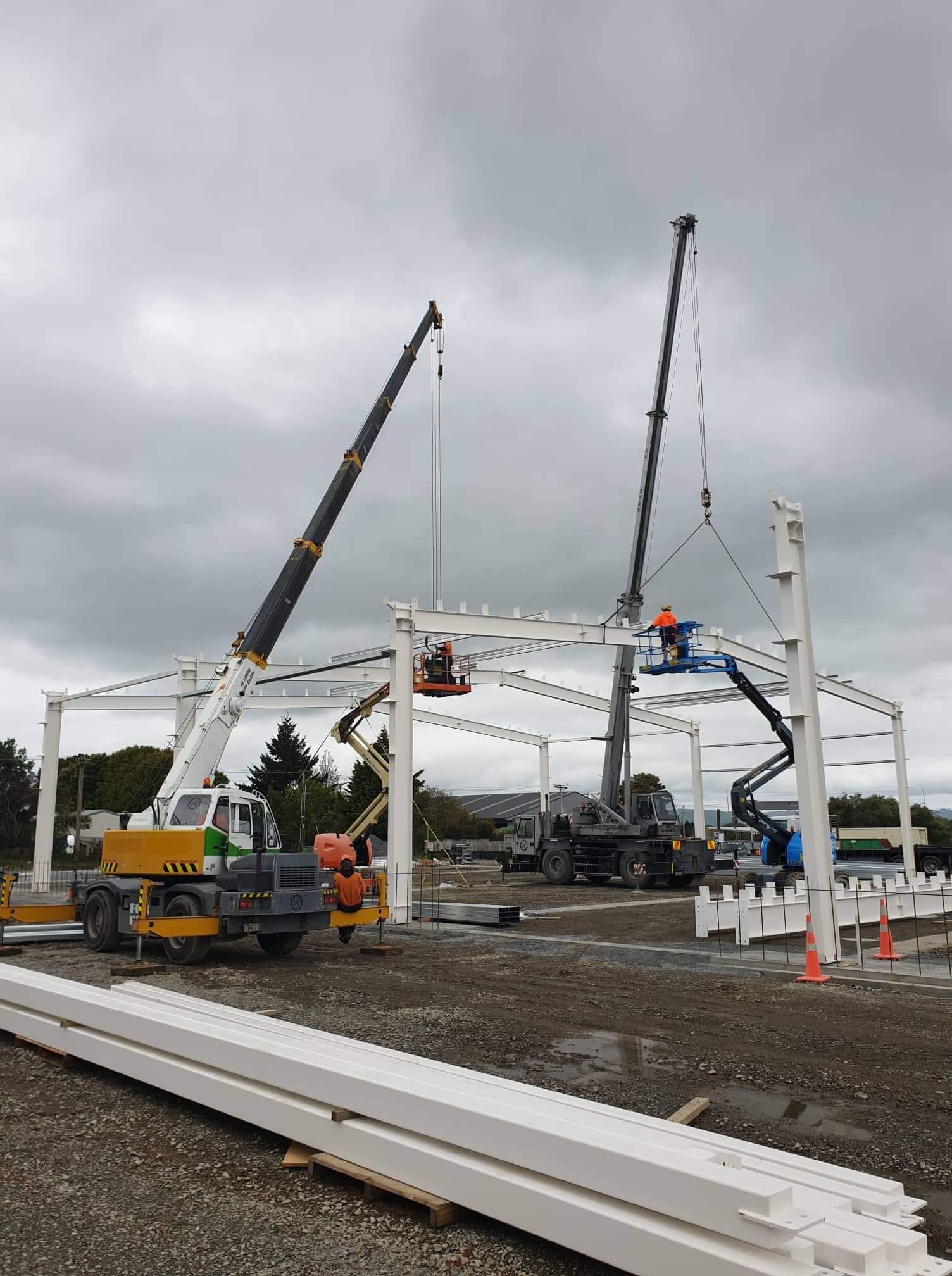
However, if your project involves high-access lifting, placing heavy pre-cast concrete panels, or positioning long structural steel portal frames that require maximum stability, heavy rigging, and vertical reach, booking a dedicated city crane or heavy mobile crane is the correct, safe choice. These specialized rigs offer finer hydraulic control, longer boom extensions, and significantly higher lifting capacities at extended radii. Our experienced team is always available to audit your site dimensions, assess your load parameters, and match your project with the perfect machine configuration.